Insulation in Minnesota
Spray Foam Insulation for Energy Efficiency & Comfort | Local Waterproofing and Concrete – Hinckley, MN
Seal in Comfort. Seal Out the Cold.
Proper insulation does more than keep your home warm — it lowers energy bills, reduces moisture, and improves indoor air quality. At Local Waterproofing and Concrete, we offer high-performance spray foam insulation services tailored to meet the specific needs of Minnesota homes and businesses.
Our experienced team delivers precise, practical application that seals every gap, giving you a more comfortable and efficient space year-round.
Call: 320-591-0280
35+
Years of Experience
Why Choose Spray Foam Insulation?
Spray foam insulation expands to fill cracks, gaps, and voids — creating an airtight barrier that prevents air leaks and moisture intrusion. It’s one of the most effective solutions for enhancing energy efficiency in both residential and commercial structures.
Where We Install Spray Foam Insulation
Each item below is presented in an accordion format to support streamlined browsing and improved user engagement.
Crawl Spaces
What Is Spray Foam Insulation for Crawl Spaces?
Spray foam insulation is an energy-efficient solution used to seal and insulate crawl spaces. It expands to fill gaps, cracks, and cavities—blocking out cold air, moisture, and pests. Applied directly to the crawl space walls or subfloor, it creates an airtight barrier that improves comfort and protects your home’s foundation.
Why It Matters in Minnesota
Crawl spaces in Minnesota homes are especially vulnerable to freezing temperatures and humidity. Without proper insulation, they can lead to cold floors, frozen pipes, and high energy bills. Spray foam offers superior thermal resistance compared to fiberglass or rigid foam, making it ideal for harsh winters.
Benefits include:
- Prevents cold drafts and moisture intrusion
- Reduces heating and cooling costs
- Discourages mold and mildew growth
- Adds structural support to floor systems
Signs Your Crawl Space Needs Insulation
- Cold or uneven floors above the crawl space
- Drafts or musty odors indoors
- Visible moisture, condensation, or sagging insulation
- High energy bills with no clear cause
How It’s Installed
After assessing the crawl space, technicians seal any air leaks before applying spray foam along the walls, rim joists, or subfloor. The foam expands to create a seamless, insulated envelope. Once cured, it adds long-term protection against temperature extremes and moisture intrusion.
The Bottom Line
Spray foam insulation in crawl spaces helps create a healthier, more energy-efficient home. It’s especially effective for Minnesota properties where cold floors and humidity are common concerns—and it offers long-term savings by improving your home’s overall performance.
Basement Walls
What Is Spray Foam Insulation for Basement Walls?
Spray foam insulation is applied directly to basement walls to create an airtight, moisture-resistant seal. It expands into cracks and gaps, insulating hard-to-reach areas and preventing air leaks. This makes it a top choice for homeowners looking to control temperature, humidity, and energy use from the ground up.
Why It’s Ideal for Minnesota Basements
Basement walls in Minnesota homes are often exposed to extreme temperature shifts and damp soil conditions. Spray foam not only insulates but also acts as a vapor barrier—critical for preventing mold, mildew, and moisture-related issues in below-grade spaces.
Benefits include:
- Reduces cold drafts and basement dampness
- Improves energy efficiency and lowers utility bills
- Helps prevent mold and moisture intrusion
- Enhances comfort in finished and unfinished basements
Signs Your Basement Needs Insulation
- Cold or clammy basement air
- Condensation on walls or pipes
- Visible cracks or water stains
- High heating costs in winter
How It’s Installed
The installation process begins with surface prep and sealing any visible air leaks. Closed-cell spray foam is then applied directly to the interior of basement walls, where it expands and hardens into a seamless insulation layer. This adds both thermal resistance and moisture protection in one step.
The Bottom Line
Basement wall spray foam insulation is one of the most effective ways to seal your home’s lower level. It adds year-round comfort, protects against moisture, and supports better energy performance—especially important in Minnesota’s variable climate.
Rim Joists
What Is Spray Foam Insulation for Rim Joists?
Rim joist insulation involves sealing the perimeter area where the floor framing meets the foundation wall—an often overlooked spot that’s a major source of air leakage. Spray foam expands to fill every gap, providing airtight coverage that fiberglass and other materials simply can’t achieve.
Why It Matters in Minnesota
In colder climates like Minnesota, rim joists are especially vulnerable to drafts, condensation, and heat loss. Unsealed rim joists can lead to cold floors, musty odors, and even mold in basement or crawl space areas. Spray foam insulation solves all of these issues by blocking air and moisture at the source.
Benefits include:
- Warmer floors on the main level
- Improved energy efficiency year-round
- Reduced condensation and moisture buildup
- Added protection against mold and wood rot
Signs Your Rim Joists Need Insulation
- Cold air near baseboards or floor edges
- Visible gaps or daylight at rim areas
- High heating costs during winter
- Damp smells or condensation in the basement
How It’s Installed
After cleaning the rim joist cavities, professionals apply closed-cell spray foam directly between the joists. The foam expands and hardens, forming a continuous thermal and air barrier. This creates lasting insulation in one of the most leak-prone parts of the home.
The Bottom Line
Rim joist spray foam insulation is a high-impact upgrade that improves comfort and efficiency throughout your home. It’s a must-have in Minnesota homes where cold air and moisture can sneak in through the smallest cracks—and it pays off in energy savings and structural protection.
Garages & Outbuildings
What Is Spray Foam Insulation for Garages and Outbuildings?
Spray foam insulation is an effective way to seal and insulate detached structures like garages, workshops, barns, and sheds. It expands to fill every gap and surface, creating a continuous barrier against cold, heat, and moisture—perfect for buildings that often lack proper insulation.
Why It’s a Smart Choice in Minnesota
Garages and outbuildings in Minnesota are exposed to extreme seasonal changes. Without insulation, they become nearly unusable in the winter and uncomfortable in the summer. Spray foam helps regulate indoor temperature, protects equipment, and creates a more usable space year-round.
Benefits include:
- Keeps garages and outbuildings warmer in winter, cooler in summer
- Reduces drafts, moisture, and energy waste
- Helps protect tools, vehicles, and stored items
- Ideal for heated garages, workshops, or hobby spaces
When to Consider It
- If your garage or shed is freezing in winter or sweltering in summer
- If you’re finishing or converting a space into a workshop or living area
- If you see visible gaps, pests, or signs of moisture in walls or ceilings
How It’s Installed
Spray foam is applied directly to walls, ceilings, or rooflines after minor prep. It fills cavities and bonds to surfaces, sealing air leaks and adding insulation in a single step. The result is a solid, seamless layer that performs better than fiberglass or foam board.
The Bottom Line
Spray foam insulation transforms garages and outbuildings from drafty structures into functional, protected spaces. It’s a long-term solution for Minnesota property owners who want to get more out of every square foot—no matter the season.
New Construction Spray Foam Insulation
What Is Spray Foam Insulation for New Construction?
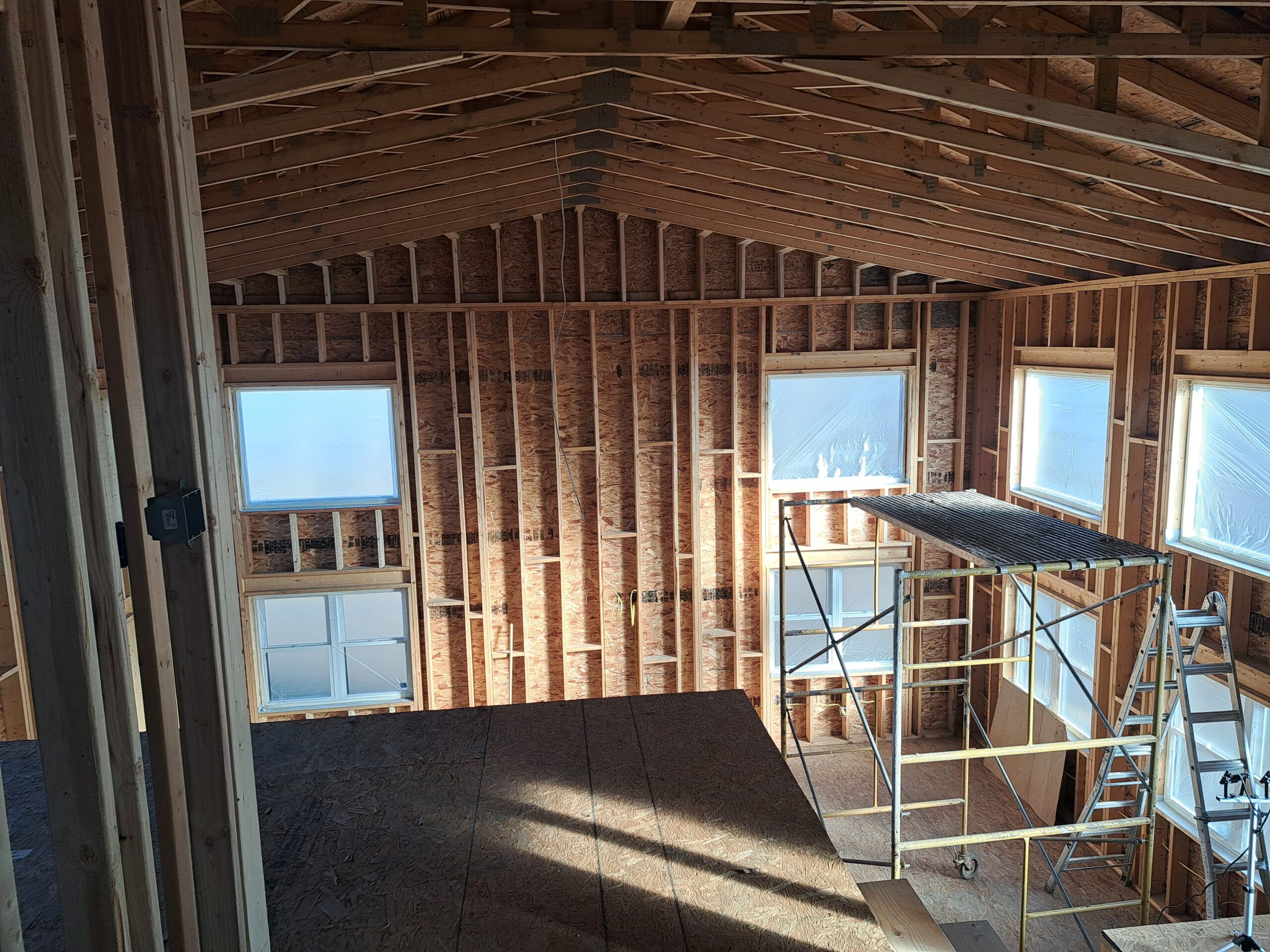
Spray foam insulation is an ideal solution for new homes, additions, and remodels. Applied during the construction phase, it expands to seal gaps and cavities before drywall or finishes go up—creating a highly efficient thermal and air barrier from the start.
Why It’s Ideal for Minnesota Builds
In Minnesota’s climate, homes need insulation that performs in extreme cold, heat, and humidity. Spray foam outperforms traditional materials by providing both insulation and air sealing in one step, helping new structures stay energy-efficient and comfortable year-round.
Benefits include:
- Seamless air sealing for better energy performance
- Lower long-term heating and cooling costs
- Moisture resistance that protects framing and structure
- Ideal for walls, attics, crawl spaces, and rim joists
Best Applications During Construction
Spray foam is perfect for:
- Entire home insulation during new builds
- Room additions and major renovations
- Basement or attic conversions
- Remodels where walls and ceilings are exposed
How It’s Installed
Once framing, electrical, and plumbing are in place, spray foam is applied directly to wall cavities, attic slopes, or floor joists. It expands instantly, filling all gaps before being trimmed flush and ready for drywall or finishing.
The Bottom Line
Spray foam insulation during new construction ensures your home or addition starts off sealed, efficient, and protected. It’s a long-term investment that maximizes comfort, lowers energy use, and gives Minnesota homeowners peace of mind from day one.
Hydrostatic Pressure
What Is Hydrostatic Pressure?
Hydrostatic pressure is the force exerted by water-saturated soil around your foundation. After heavy rains, snowmelt, or poor drainage, water builds up in the ground and pushes against basement or crawl space walls. This invisible pressure can cause significant structural damage over time, especially in Minnesota homes with clay-heavy soils.
Why It’s a Problem in Minnesota
Minnesota’s freeze-thaw cycles, abundant snowfall, and moisture-retaining soils amplify the effects of hydrostatic pressure. As water in the soil freezes and expands in winter, then thaws and shifts in spring, your foundation faces ongoing lateral stress. Without proper drainage, this pressure can lead to:
- Cracked or bowing walls
- Basement water intrusion
- Shifting or settling foundations
Warning Signs to Watch For
- Horizontal cracks in foundation walls
- Bulging or bowed basement walls
- Water stains or white mineral deposits (efflorescence)
- Wet or leaking basement floors
- Sticking doors and windows near the basement
- Pooling water or soil erosion near the home
Effective Solutions to Manage Pressure
- Interior & Exterior Waterproofing: Systems like French drains, sump pumps, and vapor barriers
- Wall Reinforcement: Carbon fiber straps, steel braces, or wall anchors for structural support
- Grading & Soil Correction: Directs water away from the foundation
- Soil Stabilization: Reduces soil movement and moisture retention
Controlling hydrostatic pressure early helps protect your home from long-term foundation damage.
How Spray Foam Works
Spray foam insulation is applied as a liquid and expands on contact to fill every crevice, making it ideal for air sealing and moisture control. It bonds tightly to wood, concrete, metal, and other materials, creating a continuous, high-R-value barrier that won’t sag or settle.
We use professional-grade equipment to ensure precise application, long-lasting adhesion, and complete coverage.
